
Microaggressions experienced by transgender people in health services: a qualitative study
Microagresiones experimentadas por personas transgénero en los servicios de salud: un estudio cualitativo.
Gabriel Ponce de Leão Lima Almeida1; João Simão de Melo Neto2; Daniela dos Santos Dantas3; André Luiz Machado das Neves4
DOI: https://doi.org/10.37767/2591-3476(2026)05
Fecha de recepción: 02.03.2026
Fecha de aceptación: 28.05.2026
RESUMEN:
El objetivo de este trabajo fue analizar las experiencias de las personas transgénero en los servicios de salud en Manaos, Amazonas, Brasil, en relación con las microagresiones. Metodología: Este estudio cualitativo, exploratorio y descriptivo, se llevó a cabo con 15 participantes transgénero. Recogida de datos: Se realizó mediante entrevistas semiestructuradas, utilizando la metodología de análisis de contenido temático. Resultados: Se reportó que las microagresiones estaban relacionadas con la negación del uso del nombre social, la dificultad para aceptar los cuerpos trans en ciertas especialidades médicas, el trato negativo en las unidades y la falta de preparación de los profesionales para trabajar en la atención de personas trans. Conclusión: La violencia subjetiva, las invalidaciones y los ataques a la identidad trans restringen el derecho a existir, alimentan inseguridades y mantienen a estas personas en una relación de poder desigual, perpetuando marginaciones invisibles que son constantemente ignoradas y provocando que las personas trans eviten los servicios de salud, lo que crea barreras en el acceso a dichos servicios.
ABSTRACT
The objective of this work was to analyze the experiences of transgender people in health services in Manaus, Amazonas, Brazil, with microaggressions. Methodology: This exploratory and descriptive qualitative study was carried out with 15 transgender participants. Data collection: This was carried out through a semistructured interview, where the methodology of thematic content analysis was used. Results: Microaggressions were reported to be related to denial of the use of social names, difficulty in accepting trans bodies in certain medical specialties, negative treatment in the units and the unpreparedness of professionals to work in the care of trans people. Conclusion: Subjective violence, invalidations and attacks on trans identity restrict the right to exist, feed insecurities and keep these people in an unequal power relationship, perpetuating invisible marginalizations that are constantly ignored and causing trans people to escape from health services, which creates barriers to accessing services.
PALABRAS CLAVE: Servicios de salud para personas transgénero; Personas transgénero; Violencia de género.
KEY WORDS: Health Services for Transgender People; Transgender People; Gender Violence.
I. Introducción
In Brazil, among the actions implemented in 2011, the National Policy for Integral Health for Lesbians, Gays, Bisexuals, Travesti and Transsexuals (PNSILGBT) discusses the process of avoiding discrimination against lesbians, gays, bisexuals, travesti and transsexuals in healthcare spaces and services, which is an ethical-political commitment for all of their managers, counselors, technicians and health workers (Brasil. 2013).
Although the PNSILGBT policy is more than 10 years old, Brazilian studies still point to recurring cases of discrimination against this population in health services (Rocon et al., 2016: 2520; Reis et al., 2021: 84; Sá et al., 2022: 87). On the international scene, studies show that, among the transgender population, traumas and microaggressions, such as conscious or unconscious insults, noticeable in communication and body language, are experienced in healthcare, which increases stigma and discomfort and strengthens access barriers to seeking future healthcare for this population (Livingston et al., 2019: 699; Mitchell et al., 2023).
Nevertheless, in the international context, the inappropriate use of pronouns is a topic frequently raised by transgender people, which leads to the experience of microaggression in different contexts of life, along with disrespect for their social name. One of the aspects discussed refers to institutional environments, especially in the health and safety sectors, where obstacles begin at the entrance, through security guards and the reception team, until the meeting with the professionals responsible for providing care. The lack of respect for pronouns and social names becomes an impediment to the inclusion of trans people in health systems (Kcomt et al., 2020: 6).
Thus, health policies must understand these experiences to develop preventive actions against the perpetrators of such violence and produce subsidies to increase quality of life and health care since the erasure of people's needs and particularities makes access difficult and results in their withdrawal from health services (Jesus, 2013: 365-366). This dialog makes it possible to contribute to the understanding of microaggressions against transgender people in the health field, which tend to create barriers to health access and bring reflections on service delivery from the perspective of the users themselves (Bogert et al., 2023: 15).
To analyze this issue, the approach of studies on the relationship between violence and health is relevant, as it is a global agenda adopted by the World Health Organization (WHO), which defines violence as any act of verbal or physical violence, obstruction or threat of violence that interferes with the availability, access and delivery of curative and/or preventive and emergency health services. The types of attacks vary depending on the context and can range from violence with heavy weapons to psychosocial threats and intimidation (World Health Organization, 2022).
Within the scope of institutions and different environments in which transgender people are frequently present, a study (Almeida et al., 2024: 128) focusing on nonbinary people identified systemic and environmental microaggressions, mainly with incorrect gender terminology and/or transphobia. The study suggested further development of microaggressions against trans people in the various sectors of goods and services and institutions.
Thus, the conceptual framework that supports this research is microaggressions, which are understood as subtle discriminations that encompass indirect discrimination, whether intentional or not, such as microaggressions and “everyday discrimination”. They manifest themselves through speeches, gestures or actions against a marginalized group, reinforcing a power relationship through discrimination and prejudice (Nadal et al., 2010: 238).
This article aims to analyze the experiences of microaggressions against transgender people — transsexual women, travesti, transsexual men, transmasculine and nonbinary — in the city of Manaus, Amazonas, Brazil. By portraying the microaggressions experienced by transgender people in the context of public and private health institutions, this study aims to contribute to the development of inclusive health care strategies that respect the individual in their entirety and identity in the face of explicit and veiled historically reproduced discrimination and violence.
II. Materials and methods
A. Context
This research is part of the project "Experiences of interpersonal interactions: microaggressions against transgender individuals". A qualitative study was conducted in the city of Manaus, capital of the state of Amazonas, in Brazil. Manaus is the second municipality in the northern region of Brazil to implement specific policies for transgender people. Although other Brazilian regions already have more consolidated services, in Manaus, the initiative only took place in 2017 (Neves and Sívori, 2024: 8-9).(Fig. 1)
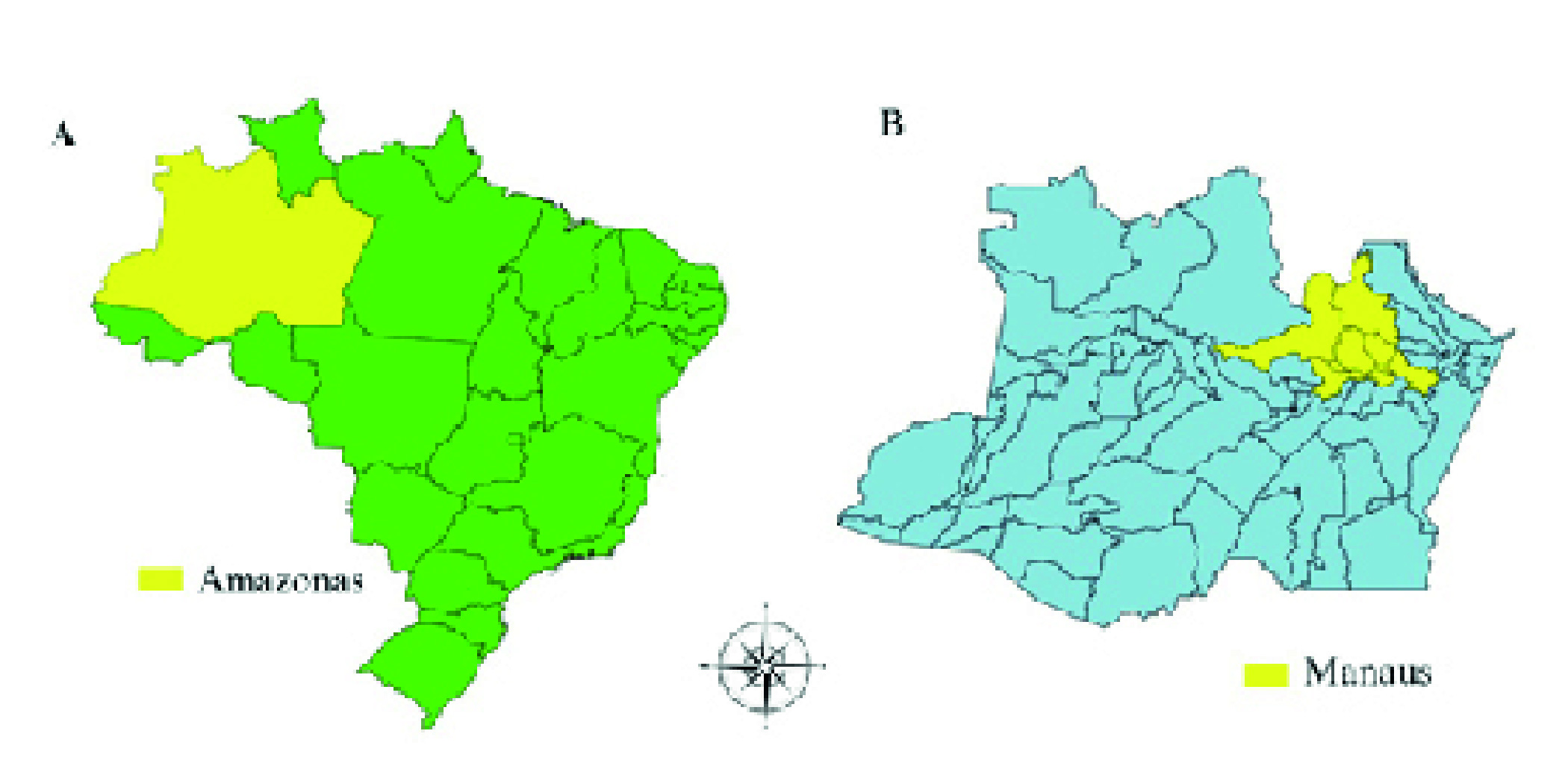
Figure 1. – Location of the state of Amazonas in Brazil (B) and the municipality of Manaus in the state (B). Created by BioRender.com. The maps were created using QGIS Desktop version 3.26 software based on map bases available at https://www.ibge.gov.br/(Access: 05/07/2024).
Manaus, located in the Legal Amazon region, is characterized by the specificities and challenges of public health policies in the Amazon. The region, which encompasses nine states and 772 municipalities, is home to approximately 27.5 million people, including 400,000 indigenous people from 170 ethnicities. This area faces a significant shortage of public services and infrastructure challenges, particularly in the communications and transport sectors. The socioenvironmental diversity of the Amazon is marked by the simultaneous existence of modern urban metropolises and traditional communities dispersed in rural and difficult-to-access regions. The disparity in the region's social, economic and health indicators reflects rapid population and economic growth, coexisting with a highly unequal income distribution and adverse living conditions for most of its inhabitants. The region is dominated by an economic model focused on the intensive exploitation of natural resources, often illegally (Garnelo, 2019: 1). Given its strategic location and the unique challenges faced by its population, Manaus represents a valuable setting for investigating inclusive health policies, contributing to a deeper understanding of health needs in highly diverse and challenging contexts such as the Legal Amazon.
Figure 1. – Location of the state of Amazonas in Brazil (B) and the municipality of Manaus in the state (B). Created by BioRender.com. The maps were created using QGIS Desktop version 3.26 software based on map bases available at https://www.ibge.gov.br/(Access: 05/07/2024).
B. Design and Participants
A purposive sampling method was used until data saturation was reached, closing the sample when new information became repetitive rather than revealing new differences (Fontanella et al., 2008: 23). There were three main entries in the research field to capture research participants: 1) the Sexual and Gender Diversity Clinic, linked to the Unified Health System (SUS-Brazil), an outpatient clinic that is the specific public service that carries out the transsexualization process of transgender people in Amazonas; and 2) the Association of Travesti, Transsexuals and Transgenders of the State of Amazonas (ASSOTRAM-Brasil), a social and political movement of transgender people in the state of Amazonas. Additionally, participants were recruited from settings dedicated to health services or political activism. Participants were also recruited through 3) Snowball Technique (Vinuto, 2014), a nonprobabilistic sampling method where people selected for the study could invite new participants from their network of friends and acquaintances.
Table 1 outlines the sociodemographic profile of the participants, their pseudonyms and characteristics of the participants, including their gender, age, preferred pronouns, level of education, occupation, and marital status.
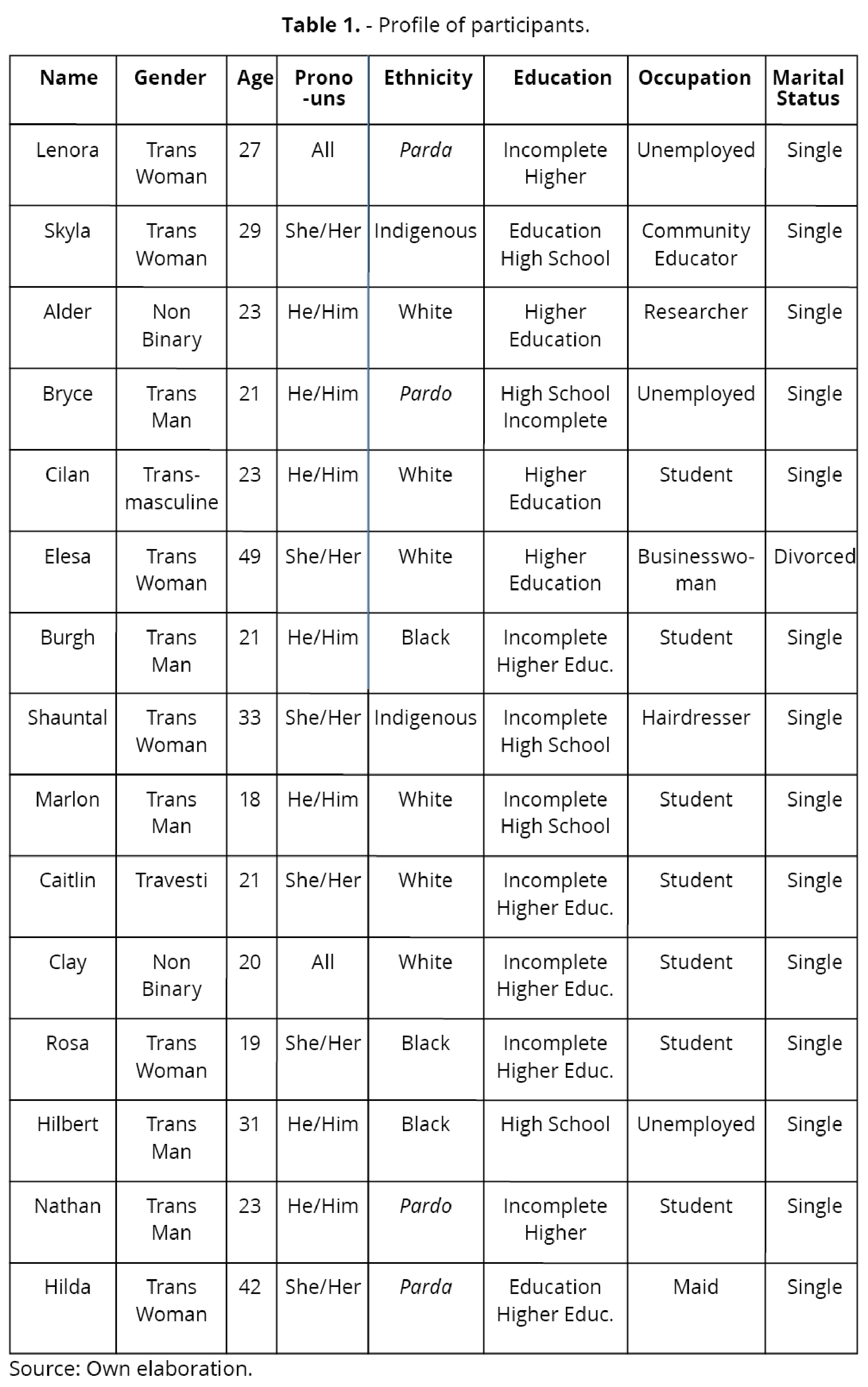
Participants were defined based on self-identification as a gender different from that assigned at birth, specifically as trans men or women, travesti and nonbinary people. All participants were 18 years of age or older and had experienced some form of microaggression at some point in their lives. Their ethnicity was self-defined. As a methodological exclusion criterion, the condition of severe psychological distress was defined, as in cases of psychotic conditions, due to the greater risks that the interview could represent, which could generate triggers and situations of lack of control.
For context, “travesty” is a transgender identity, aligned with femininity, common in Latin America, with a strong emphasis on self-affirmation and resilience. “Pardo” is an ethnicity mainly used in Brazil for people who identify as mixed-race.
C. Data collection
Face-to-face interviews, each lasting from thirty minutes to one hour and ten minutes, were conducted at the outpatient clinic itself or at the Psychosocial Care Space (EPSICO/UEA-Brazil). Interviewers trained and experienced in qualitative interview techniques ensured an environment conducive to open discussions. With the consent of the participants, all interviews were audio recorded, transcribed in full, anonymized and stored for confidentiality purposes.
The interviews were guided by a semistructured script with the following guiding questions: introductory questions focused on the participant's basic information; questions about the experience of possible microaggressions in different environments; and questions about perceptions about microaggressions and possible solutions. The recordings were stored in the cloud, with access restricted to the Center for Psychosocial Studies on Human Rights and Health (NEPDS-Brazil) research group. The recorded material was transcribed in full, and people's names were coded so that other researchers would not have access to the participants' identities.
D. Data analysis
To ensure the accuracy of the transcriptions, the primary researcher checked and reviewed each Portuguese transcript with the original audio recordings. The transcripts were then translated into English by the same researcher. Braun and Clarke's thematic analysis methodology was used for qualitative data processing. Initial codes were developed inductively by the primary researcher and continuously refined during the analysis of each transcript by the research team (Braun and Clarke, 2006). For coding, a table was created where the themes that emerged in the initial coding were inserted, separating the codes into different colors. Repetitive codes were grouped into main codes, and all codes were then analyzed and broadly categorized into subsequent themes. Each theme was reviewed and refined to ensure that it presented a coherent pattern and was supported by the coded data.
After coding and thematic analysis, all subthemes were classified as themes based on experiences of microaggressions, determined by their alignment with scientific discourse on violence and health and the conceptual framework of microaggression.
E. Ethical Aspects of Research
This research was approved by the Ethics and Research Committee with Human Beings of the State University of Amazonas, which issued a favorable opinion to carry out the study under CAEE opinion 12401219.9.0000.5016, as governed by Brazilian resolutions of the National Health Council - Resolution no. 466/2012. Fictitious names have been assigned to all participants in the study.
III. Results
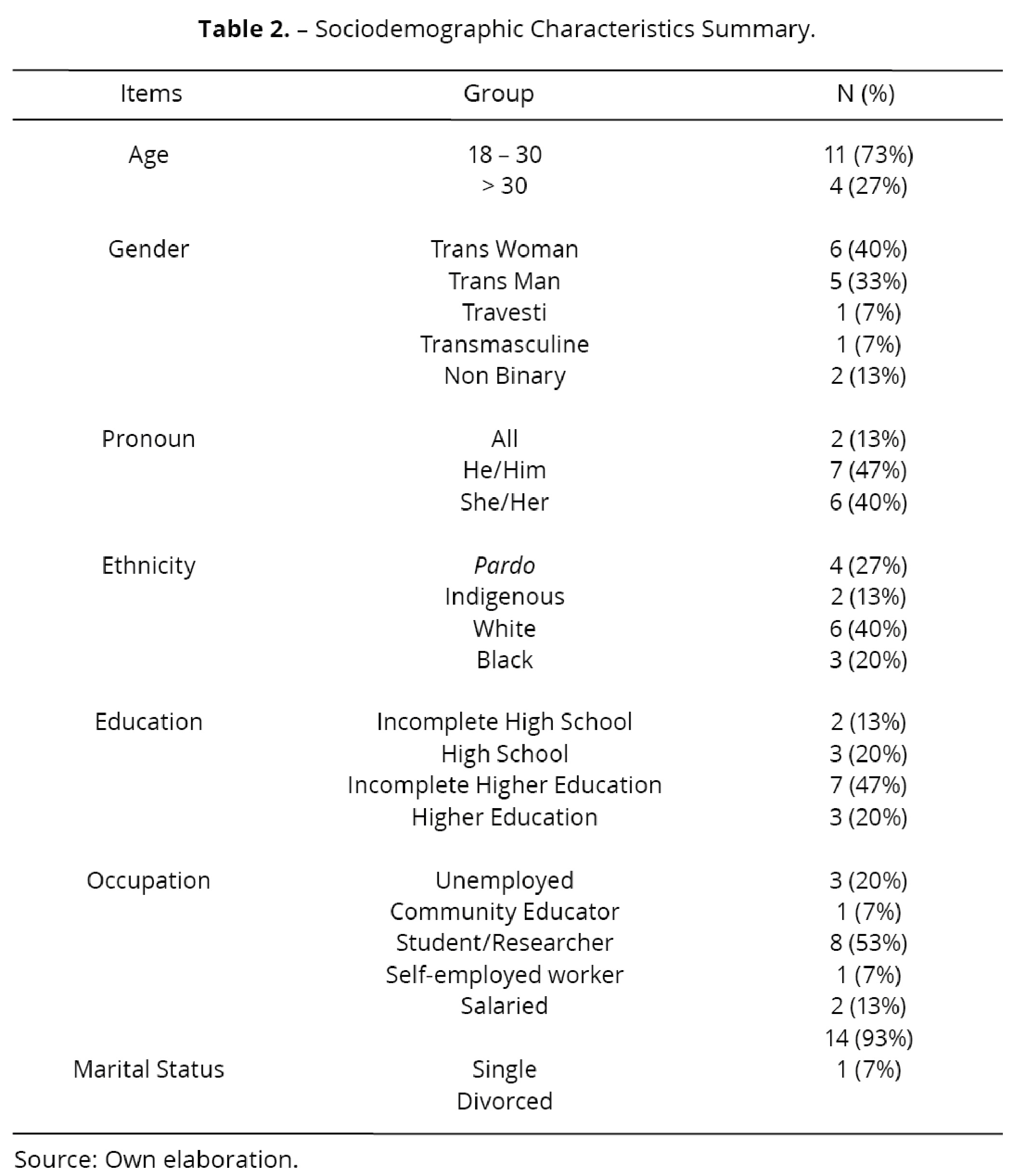
The study included 15 transgender participants, the majority of whom were trans women (40%), aged between 18-30 years (73%), white (40%), had incomplete higher education (47%) and were students/researchers (53%), as seen in Table 2, with percentages of the participants’ characteristics.
Four themes were identified: 1. Denial of transgender identity by health professionals; 2. Incorrect use of pronouns/social names; 3. Behaviors of disapproval of the transgender experience; and 4. Implications for health care to combat microaggressions from the perspective of transgender people. The following sections presents the main themes that express the experiences of microaggressions in public and private health services against the transgender people who participated in the study.
A. Denial of transgender identity by health professionals
The denial of transgender identity implies not recognizing how this individual perceives themselves or the inappropriate use of language. This factor makes any type of bond impossible, resulting in the maintenance of the invisibility of transgender identities. As we can see in the following excerpt:
“[...] due to her [the psychologist] religion, for some reason, she couldn’t work on it. When I told her, she said “No, you’re not Lenora, you’re a person”. (Lenora, trans woman, parda)
This speech, narrated by the interlocutor, refers to the experience of denial of this trans woman's identity through the health professional's religious identification, which makes subjective issues and professional support impossible. In this way, it is understood that the patient is disqualified and not welcomed.
It can be understood that this same statement refers to the idea of denying any understanding that the person has of themselves. In these spaces where there should be support, acceptance and care for mental health, their subjectivities are denied. It is observed here that health professionals often reduce transgender identities. These factors result in the refusal of care. The following statement exemplifies the lack of welcoming and the denial of care by health professionals:
“[...] but other cases with other girls [making references to other transgender people], they make a fuss to see if they can be heard, because travesti are not heard in healthcare. When it’s a travesti, ‘Oh, I don’t want to help’ or ‘Oh, she doesn’t need it’, then they just give her a prescription, so there’s no welcoming” (Skyla, trans woman, indigenous).
Other situations refer to the embarrassment that trans people experience when explaining their identity:
“[...] for example, when I go to collect blood for tests, the nurse always looks at me with doubt, you know? ‘Is this truly the person with that name? Is that truly you?’ You have to explain the whole situation [That it’s a transgender person], you end up feeling a little embarrassed” (Alder, nonbinary, white).
These statements imply the social suffering experienced by people who seek care and access to healthcare, which is everyone's right. However, institutionalized and interpersonal issues in the healthcare sector reproduce precariousness regarding the citizenship of transgender people, which involves a public that is made invisible in regard to health.
B. Incorrect use of pronouns/social names
Even in the specific healthcare environment for caring for the trans population, there is incorrect use of treatment pronouns when referring to trans users, causing embarrassment and violating their right to have their gender identity respected. This incorrect use of the treatment pronoun can be observed in the following report:
“They always got the pronouns wrong, and I was very stressed about it because we are there at the only trans clinic in the city, right? A space that should promote acceptance for trans people and yet the professionals... they do not... they do not insist on getting the pronoun right. If he is in doubt, he could ask the person; it will not offend, it avoids embarrassment” (Alder, nonbinary, white).
The participants' reports also express the difficulties faced by transgender people right at the entrance to healthcare environments when they need to identify themselves to access services. One of the participants portrays the embarrassment caused by the fact that his registered name is called out loud, instead of his social name, highlighting that this attitude attracts the attention of everyone present in this space:
“I use the health plan that does not support social names and, as if that was not enough, every time they call the name they call it from the giant record on the screen, in a voice speaking out loud, this causes a lot of embarrassment because everyone looks to see who is lifting. Then, when I enter the professional’s office, the professional… he gets a little confused, he doesn’t know exactly how to address me” (Alder, nonbinary, white).
The statement below highlights the frustration of explaining and correcting the professional without success, reporting the feeling that there is resistance on the part of professionals in accepting the correct use of their social name and, consequently, their gender identity.
“I had to correct it several times... Even though we have, you know, the social name, people do not… they do not accept it. We corrected it, and the person pretended they did not hear. Therefore, they keep calling the wrong pronoun (Bryce, trans man, pardo).
Despite advances in the legal framework in Brazil regarding the right to use one's social name and pronouns correctly in the Brazilian public health sector, there are still disrespectful practices causing the population to stay away, increasing vulnerability to illness and thus creating barriers to access to healthcare.
C. Disapproving behavior of the transgender experience
Behavioral reactions from health professionals often reveal prejudice against trans people. One participant described his visit to a primary health care unit (UBS), where he was received by a professional who expressed disbelief about the veracity of the document. This type of stigmatizing attitude occurs explicitly, as shown in the following report:
“I went to a UBS... Up until that point, the receptionist had only seen me wearing a mask, so she said, 'Ma'am, I can help you now.' She took my ID, but as soon as I spoke, she tried to force a situation she couldn't change, just because of my voice... She called her supervisor in the back and said, 'It's this document here, but I don't know if it is [really him]...' (...) It wasn't said explicitly to my face. But it was a veiled prejudice... it was surreal. (Shauntal, trans woman, indigenous)
Another recurring description was the feeling of discomfort when faced with reactions of disapproval of the transgender experience, whether explicit or subtle. The experiences portray exclusionary communication manifestations, with a perception of discrimination and stigma, according to the reports:
“And the other [receptionist] also asked, “I’m sorry to ask you, but is that… is it to remove… the ‘boobies’?” Then, I went…[speechless]”. (Bryce, Transman, pardo)
“I think every day, you know, on the bus... on the street... Discomfort... People's eyes... Nobody looks at me, I do not know, they treat me masculine(..)” (Burgh, man trans, black)
In addition to the feeling of discomfort, the recurrent experience of micro insults and micro harassment, added to the need to prepare professionals who provide health care, can act as a potential barrier to seeking services:
“I believe that there should be the best training on how to deal with people for those people who are responsible for the administration part. Most of the problems are always with people who do not know how to care for a trans person or what type of treatment they need to receive. I feel like this is the biggest impediment, both for me and for other trans people who I see still complaining about the same points.” (Alder, nonbinary, white)
In this way, repeated experiences of microaggressions, including rejection of identities that generate discomfort and disapproval, can worsen by constituting institutional barriers for people, further reinforcing their invisibility and removal from health care.
D. Implications for health care to combat microaggressions from the perspective of transgender people
When analyzing the reports, it is observed that care for transgender people needs to be reevaluated so that this care is provided from the perspective of comprehensiveness so as not to limit identities and constitute barriers to accessing health. Despite these obstacles, participants highlighted in their reports different ways of ensuring more inclusive healthcare, debating on the topic and knowing the laws and ordinances that support them to argue with those who are unaware and thus enable their rights to be guaranteed, as seen in the following excerpts:
“And I said that there is an ordinance, there is a law in which there is a need for any medical care, any public assistance” (Elesa, trans woman, white)
“Do you know that there is a decree that a person has the right to a social name within the SUS?’, ‘No’, so I said, ‘There is, you should research it” (Shauntal, trans woman, indigenous)
Furthermore, despite the struggles and the need to demarcate spaces in health services, it was reported that, generally, they seek care in specific places to meet their health needs and that this makes them feel validated, also acting as a welcoming point. The city even has a specialized medical care center for this population.
“At PAM [Specialized Medical Care Station],] I no longer feel uncomfortable, thus far everyone has treated me well in the right way, and the PAM system has support for the social name, so despite everything they have access there.” (Alder, nonbinary, white)
“I say it like this, I went to the PAM [Specialized Medical Care Center] not wanting to take hormones, [now] I'm going to take hormones, I have already done a series of tests” (Lenora, trans woman, parda)
“In fact, for the gynecological issue, I am choosing to speak to the professionals at the Specialized Medical Assistance Station (PAM) because they are prepared; in fact, I think they are the only people prepared for this here”. (Alder, nonbinary, white)
Finally, although a National Ordinance has been in force for more than 10 years, it has redefined and expanded the transsexualization process in the Unified Health System (SUS) in Brazil. The provision of integrated and biomedical services in the public sphere, such as hormonal treatments, plastic surgeries and others, does not yet seem to be able to meet the demand for the state's transgender population. This population often resorts to their own resources or unsafe procedures to benefit from the health service. According to the following report:
“[...] in São Paulo trans masculine people receive testosterone through the SUS and here we don’t have that. In addition, these are prices that come out of our reality. It costs at least 200 reais for these medicines that we have to use more or less every 2 months or 3 months, so we can do this if we try and we can bring them here, but since it also does not just depend on one collective, it depends on other bureaucracies.” (Alder, nonbinary, white)
It is possible to identify the need for networked services that strengthen identities and promote well-being at different levels of care. These networks, in addition to offering emotional and technical support, must provide a safe space to share experiences and strengthen care for the transgender population.
IV. Discussion
This study implies that microaggressions are deeply rooted in social interactions in healthcare environments. In line with the World Health Organization (WHO, 2022) definitions of violence in healthcare, our findings, specifically the denial of social names, negative treatment, difficulties in accepting trans bodies, and the unpreparedness of professionals, demonstrate how these actions violate rights and create barriers to accessing healthcare.
Microaggressions include practices of disrespect and discrimination, manifested through the inappropriate use of pronouns and failure to adopt the correct social name, as well as verbal, visual and physical harassment that undermines gender identity. These forms of symbolic and explicit violence not only harm the well-being of transgender people but also seriously compromise the quality and equity of health care.
Disrespect for the correct social name and pronouns is a common form of everyday microaggression faced by trans people. The social name is crucial to representing a person's true gender identity, and its denial not only invalidates this identity but also causes deep emotional and psychological discomfort, often in spaces and by professionals who should ensure the health of these people. Inappropriate use of the correct pronouns, as well as the social name, such as calling a trans woman by the pronoun "he" or a trans man by the pronoun "she", demonstrates a lack of respect for the person's gender identity, affecting their self-esteem and creating barriers to receiving adequate health care. Incorrect use often does not occur through ignorance of the pronoun used but through the conscious use of the wrong pronoun, aiming to deny trans identity.
The difficulty for healthcare professionals to care for trans people with equity highlights the urgent need for specialized training and awareness raising. Many professionals are not prepared to fully understand the specific needs of this community, resulting in inadequate care and exacerbating the experiences of discrimination and marginalization faced by trans people.
A. Disrespect for social names and pronouns
The results indicate that microaggressions against trans people involve the incorrect use of their social name and treatment pronouns by health professionals, with implications for self-esteem and mental health and, above all, constitute attacks on identity. Consistent with our participants' reports on the distress caused by this invalidation, Binotto et al. (2023: 5) argues that respecting one’s social name is a significant way of supporting the gender affirmation of trans people.
The name transcends personal experiences, singularities and individual values, playing a fundamental role in trans identity. The construction of the name is an active way for the individual to express themselves in relation to meanings, experiences, and affections, and because of these choices, it is possible to understand the symbolic aspect of the (re)signification of trans identity (Mota et al., 2022: 5).
The correct use of the name means entering the different forms of human existence, as well as considering current legislation. A great deal of effort is still needed from public authorities so that trans people are increasingly included in social spaces. The adequacy of social names includes respecting plurality and validating the identity of trans people (Binotto et al., 2023: 6).
The study of the impact and importance of the correct use of pronouns for trans people is an emerging field, with a limited amount of material available. However, existing research indicates that trans people's appropriate use of their chosen pronouns not only has a significant positive impact but also provides a sense of belonging and respect by validating their gender identity (Zimman, 2018: 180).
The discussion about the use of pronouns in debates about exclusion and inclusion has been a recently revived topic, not limited to discussions in the 21st century. Robinson and Elias (Molton et al., 1978: 1034) reported that even when masculine pronouns were used in neutral contexts to refer to both men and women, few participants considered both genders equally, focusing predominantly on the male figure. Trans people, specifically nonbinary people, often do not feel represented by any of the traditional pronouns, which are linked to the gender binary, a concept that not all trans people identify with. This has led to the suggestion of pronouns that are not linked to established binary genders (Wayne, 2005: 86). In some situations, the use of a pronoun or even a noun can be used to reinforce a gender imposition, varying depending on the social context in which the person is inserted.
It is evident that the citizenship of trans people is poorly addressed by the State, reflecting historical and inhumane patterns of marginalization. This factor compromises the recognition of names and gender identities, as it reinforces a historical factor of insufficient citizenship, which compromises the most vulnerable populations (Bento, 2014: 167).
Research by Russell et al. (2018: 505) points out that the use of social names in more contexts is associated with lower levels of depression, suicidal ideation and behavior. These rates, the results of a sample of 129 trans people, were lower when social names could be used, relating to the use of their chosen name and protective factors. To address the institutional barriers (such as electronic medical records calling out deadnames) reported by our participants, Sequeira et al. (2020) argued that the majority of transgender youth want the ability to document names and pronouns throughout the electronic health record system and that to better support this vulnerable group, health systems and electronic health records must allow for names and pronoun documentation. system-wide pronouns, even when the patient has not legally changed their name.
B. Lack of reception and unpreparedness of professionals
Our analysis revealed that health professionals, including the entire SUS multidisciplinary team, often face significant challenges when providing quality care to trans people due to discrimination manifested in the lack of respect for identity and social name (Rocon et al., 2017: 528; Bonato et al., 2021: 16). It is crucial to implement a continuous learning and training process for the entire team, ensuring that good service is not restricted to certain environments but is accessible in all public services. This is due to the excellent service offered in places specialized in trans demand, in contrast to other environments offering broader services, where microaggressions tend to occur more frequently.
The formation of support networks, which can include family support, romantic relationships, friendships and participation in organized groups, plays a crucial role in promoting health and consolidating the identity of trans people (Silva, 2018: 140; Cortes et al., 2022: 113). These networks not only offer emotional and practical support but also provide a safe space to share experiences and strengthen self-confidence and self-acceptance within the trans community, including within healthcare spaces through, for example, therapeutic groups.
The perception of body change is one of the main factors that leads trans people to suffer microaggressions. These microaggressions can manifest themselves in a variety of ways, from avoidance, where people do not want to share the same spaces, to outright verbal disapproval. The trans body, a topic that will be covered in more detail in the next topic, is a constant source of concern for trans people, as it often does not fit into the predominant binary norm. Corroborating the discomfort and disapproval regarding trans bodies expressed by our interviewees, Tabaac et al. (2018: 14) note that the discrimination trans people face is closely linked to issues of anxiety, which can manifest itself in many ways, including the constant fear of being rejected or ridiculed by peers and teachers.
For people in the process of transition, attacks on body image are particularly devastating. Transition is a period of extreme vulnerability where an individual is struggling to align their physical appearance with their gender identity. During this time, body image criticism or rejection can not only cause significant emotional distress but also undermine confidence and hinder transition progress. Additionally, the constant pressure to conform to social expectations and the continued experience of microaggressions can lead to more serious mental health problems, such as depression and anxiety disorders.
In addition, there are disparities in access to healthcare for vulnerable groups. LGBT people, who face discrimination in various contexts of their lives, also affect the way they experience their health issues (Cardoso and Ferro, 2012: 558). In particular, trans people encounter even more obstacles in accessing these services, where issues such as discrimination and lack of knowledge on the part of the healthcare team about trans identity prevent full access to the ideal service (Monteiro and Brigeiro, 2019: 4-6).
The difficulties faced by trans people are multidimensional barriers, with political, socioeconomic, organizational, technical and symbolic obstacles existing and a prevalence of technical barriers. It is recommended that the theme of gender and sexuality be included in health training since graduation, reinforcing it in residencies and specializations (Pereira and Chazan, 2019: 12-13). In this way, the trans body is immersed in complex semiotics that can either bring it closer or further away from an ideal of health. Body language, conformity or noncompliance with cisnormative standards, and the ability to access specific medical treatments, such as hormone therapy and gender-affirming surgeries, are all elements that influence this dynamic. The perception of health and well-being of trans people is, therefore, modulated by a series of symbols and meanings that can facilitate or hinder access to adequate and respectful health care (Rocon et al., 2017).
C. Absence of the State in inclusive Social Policies
Social policies are scarce or inadequate, contributing to the perpetuation of inequalities and violence. In health, for example, adequate access to hormonal treatments and specific health services for gender transition is limited, which can lead to serious consequences for the physical and mental health of these individuals. Furthermore, gender-sensitive psychological and psychiatric assistance is often nonexistent or insufficient. Furthermore, the absence of protection policies against violence and discrimination puts the safety and physical integrity of trans people at risk. who face disproportionate levels of violence, including physical and verbal aggression, and who violates fundamental human rights principles.
An issue that makes it difficult for transgender people to have full access to healthcare is the fact that actions aimed at this population generally focus on preventing STIs, treating the LGBT acronym as a single identity, and ignoring other needs and services. However, this is not confirmed, as each group within the acronym has its own demands due to their different experiences (Aguião, 2016: 294).
In Brazil, health services aimed at trans people are being gradually implemented, especially in primary and secondary care, taking into account these specificities. Many of their demands are related to bodily changes, such as hormones, prosthetics and gender-affirming surgeries. However, trans people face major barriers when trying to access health services, whether due to discrimination in these environments or socioeconomic reasons, such as the unavailability of services close to their homes (Monteiro and Brigeiro, 2019: 6).
In their research, Tagliamento and Paiva (2016: 1563) noted that in specialized Brazilian health services, untrained service providers applied gender norms and stereotypes to trans people. As a result, the authors concluded that the promotion and protection of the right to health depend on cultural changes. This could include changes in the technical-scientific discourse on the transgender experience, aiming to depathologize and recognize gender fluidity.
In spaces that should offer support and mental health care, we observe disrespect regarding pronouns and social names, reducing transgender identities and erasing their individuality. A study by Freire et al. (2013: 479) promoted discussion about the limited right to health and access to health services experienced by transgender people. This can be justified by the cases of discrimination experienced by this group resulting from the inadequate reception of health professionals, as well as possible technological resources used.
Regarding health demands, attention to mental health is as necessary as physical care. A study from the United States carried out by Budge, Adelson and Howard, which analyzed 351 trans people and 226 trans women, revealed that 51.4% of trans women presented symptoms of depression, and 40.4% presented symptoms of anxiety, exceeding the values of the general population (Budge et al., 2013).
In Brazil, a similar study was carried out by Chinazzo et al. (2021), who interviewed 378 trans people to understand the impact of minority stress on depressive symptoms, suicidal ideation, and suicide attempts. As a result, 67.2% of the participants presented depressive symptoms, 67.7% presented suicidal ideation, and 43.1% attempted suicide. In both studies, the lack of social and family support, in addition to passability5 issues, was highlighted as a fundamental factor justifying the high numbers of participants. Similar to the findings of Chinazzo et al. (2021), our participants also reported that these abandonments drastically affected their mental health.
It is also very common for trans people to look for different aesthetic resources, as it is fundamental to their well-being, mental health and social life. The use of biomedical resources to improve well-being, such as hormonal treatments and plastic surgeries, is extremely common. However, lacking state assistance, trans people end up financing these procedures themselves, often risking their health with unsafe, low-cost materials.
As it appears, there is the presence of policies aimed at this population, even if few and incomplete. Even so, it can be said that the existence of public policies does not guarantee adequate access for the trans population to health services, as this access is affected by several factors. Problems such as the lack of preparation of health professionals, the pathologization of the trans experience and, above all, the lack of reception are still frequent. On the other hand, building good relationships with health professionals is essential for promoting the health of this population (Oliveira and Romanini, 2020: 13).
V. Conclusion
This work analyzed the experiences of microaggressions experienced by transgender people—transsexual women, travesti, trans men, transmasculine and nonbinary—in Manaus. The perceptions allowed the discussion of several thematic axes, including the denial of transgender identity by health professionals, the incorrect use of the pronoun/social name, behaviors of disapproval of the transgender experience and implications for health care for coping with microaggressions from the perspective of transgender people.
Gender transition is a time of extreme vulnerability, and attacks on body image can cause significant emotional distress, undermining confidence and hindering transition progress. Inadequate social policies perpetuate inequalities and violence, and access to hormonal treatments and specific services for gender transition is limited, with serious consequences for physical and mental health.
Gender-sensitive psychological and psychiatric care is often insufficient, and the lack of policies to protect against violence and discrimination puts the safety of trans people at risk, who face disproportionate levels of violence. Despite the existence of some public policies, their impact is limited due to factors such as the lack of preparation of health professionals, the pathologization of the trans experience and the lack of acceptance.
Health policies need to be aware of these experiences to develop preventive actions and improve the quality of life and health care of these people, whose specific needs are often ignored, making access to health services difficult. We propose implementing or reinforcing mandatory training in primary health care units; adapting electronic medical records to include the chosen name; and decentralizing specialized care beyond the capital city. Implementing these strategies is essential for public health policies in hybrid zones like the Amazon, where vulnerabilities related to ethnicity, race, and geographic isolation intersect with gender identity, to effectively dismantle systemic transphobia and ensure equitable care.
References
• Brasil. Ministério da Saúde. (2013). Política Nacional de Saúde Integral de Lésbicas, Gays, Bissexuais, Travestis e Transexuais (1ª ed., Vol. 1). Ministério da Saúde.
• Rocon, P. C., Rodrigues, A., Zamboni, J., & Pedrini, M. D. (2016). Dificuldades vividas por pessoas trans no acesso ao Sistema Único de Saúde [Difficulties experienced by trans people in accessing the Unified Health System]. Ciência & Saúde Coletiva, 21(8), 2517–2526.
• Reis, P. S. de O., Neves, A. L. M. das, Therense, M., Honorato, E. J. S., & Teixeira, E. (2021). Veiled transphobia: Nurses-created meanings vis-à-vis the user embracement of transvestites and transgenders. Revista de Pesquisa Cuidado é Fundamental Online, 13, 80–85.
• Sa, P. T., Caputo, V. G., & Moraes, M. A. A. (2022). Percepção de pessoas transexuais sobre os atendimentos em serviços de saúde [Perception of transsexual people about care in health services]. Revista Psicologia e Saúde.
• Livingston, N. A., Berke, D. S., Ruben, M. A., Matza, A. R., & Shipherd, J. C. (2019). Experiences of trauma, discrimination, microaggressions, and minority stress among trauma-exposed LGBT veterans: Unexpected findings and unresolved service gaps. Psychological Trauma: Theory, Research, Practice, and Policy, 11(7), 695–703.
• Mitchell, L. A., Jacobs, C., & McEwen, A. (2023). (In)visibility of LGBTQIA+ people and relationships in healthcare: A scoping review. Patient Education and Counseling, 114, Artigo 107828.
• Kcomt, L., Gorey, K. M., Barrett, B. J., & McCabe, S. E. (2020). Healthcare avoidance due to anticipated discrimination among transgender people: A call to create trans-affirmative environments. SSM - Population Health, 11, Artigo 100608.
• Jesus, J. G. (2013). O conceito de heterocentrismo: Um conjunto de crenças enviesadas e sua permanência [The concept of heterocentrism: A set of biased beliefs and its permanence]. Psico-USF, 18(3), 363–372.
• Borgert, V., Stefanello, S., Signorelli, M. C., & Santos, D. V. D. (2023). "A gente só quer ser atendida com profissionalismo": Experiências de pessoas trans sobre atendimentos de saúde em Curitiba-PR, Brasil ["We just want to be treated with professionalism": Experiences of trans people about health care in Curitiba-PR, Brazil]. Physis: Revista de Saúde Coletiva, 33, Artigo e33033.
• World Health Organization. (2022). Stopping attacks on health care. https://www.who.int/activities/stopping-attacks-on-health-care
• Almeida, G. P. L., Neves, A. L. M., & Dantas, D. S. (2024). Experiências de microagressões contra a identidade não-binária [Experiences of microaggressions against non-binary identity]. Periodicus, 1(20), 121–124.
• Nadal, K. L., Rivera, D. P., & Corpus, M. J. H. (2010). Sexual orientation and transgender microaggressions: Implications for mental health and counseling. In D. W. Sue (Ed.), Microaggressions and marginality: Manifestation, dynamics, and impact (pp. 217–240). John Wiley & Sons, Inc.
• Neves, A. L. M. das, & Sívori, H. F. (2024). Ação política em saúde de pessoas trans em Manaus, Amazonas, Brasil [Health political action of trans people in Manaus, Amazonas, Brazil]. Ciência & Saúde Coletiva, 29(1), Artigo e00642023.
• Garnelo, L. (2019). Especificidades e desafios das políticas públicas de saúde na Amazônia [Specificities and challenges of public health policies in the Amazon]. Cadernos de Saúde Pública, 35(12), Artigo e00220519.
• Fontanella, B. J. B., Ricas, J., & Turato, E. R. (2008). Amostragem por saturação em pesquisas qualitativas em saúde: Contribuições teóricas [Saturation sampling in qualitative health research: Theoretical contributions]. Cadernos de Saúde Pública, 24(1), 17–27.
• Vinuto, J. (2014). A amostragem em bola de neve na pesquisa qualitativa: Um debate em aberto [Snowball sampling in qualitative research: An open debate]. Temáticas, 22(44), 203–220.
• Braun, V., & Clarke, V. (2006). Usando análise temática em psicologia [Using thematic analysis in psychology]. Qualitative Research in Psychology, 3(2), 77–101.
• Binotto, F. S., Brum, V. M., Silva, L. A., Unfer, B., & Torres, L. H. N. (2023). Construção do nome social de pessoas trans e aspectos relacionados em um município de porte médio do Sul do Brasil [Construction of the social name of trans people and related aspects in a medium-sized city in Southern Brazil]. Ciência & Saúde Coletiva, 29(2).
• Mota, M., Santana, A. D. S., Silva, L. R., & Melo, L. P. (2022). "Clara, esta sou eu!" Nome, acesso à saúde e sofrimento social entre pessoas transgênero ["Clara, this is me!" Name, access to health and social suffering among transgender people]. Interface - Comunicação, Saúde, Educação, 26, Artigo e210515.
• Zimman, L. (2018). Pronouns and possibilities: Transgender language activism and reform. In Language and social justice in practice (pp. 176–183). Routledge.
• Molton, J., Robinson, G. M., & Elias, C. (1978). Sex bias in language use: "Neutral" pronouns that are not. American Psychologist, 33(11), 1032–1036.
• Wayne, L. D. (2005). Neutral pronouns: A modest proposal whose time has come. Canadian Woman Studies, 24(2-3).
• Bento, B. (2014). Nome social para pessoas trans: Cidadania precária e gambiarra legal [Social name for trans people: Precarious citizenship and legal "workaround"]. Contemporânea - Revista de Sociologia da UFSCar, 4(1), 165–182.
• Russell, S. T., Pollitt, A. M., Li, G., & Grossman, A. H. (2018). Chosen name use is linked to reduced depressive symptoms, suicidal ideation, and suicidal behavior among transgender youth. Journal of Adolescent Health, 63(4), 503–505.
• Sequeira, G. M., Kidd, K., Coulter, R. W., Miller, E., Garofalo, R., & Ray, K. N. (2020). Affirming transgender youths’ names and pronouns in the electronic medical record. JAMA Pediatrics, 174(5), 501–503.
• Rocon, P. C., Zamboni, J., Sodré, F., Rodrigues, A., & Roseiro, M. C. F. B. (2017). (Trans) formações corporais: Reflexões sobre saúde e beleza [(Trans) corporal formations: Reflections on health and beauty]. Saúde e Sociedade, 26(2), 521–532.
• Bonato, F. R. C., Mussi, A., Valentini, T., Nunes, T. N., Assunção, T. F. A., & Tagliamento, G. (2021). Estarão as (os/es) profissionais da psicologia preparadas (os/es) para o atendimento de pessoas trans? [Are psychology professionals prepared to care for trans people?]. Revista Brasileira da Educação Profissional e Tecnológica, 2(21), Artigo e13170.
• Silva, M. F. (2018). Trajetórias trans: Apoio social e relações afetivo-sexuais de transexuais [Trans trajectories: Social support and affective-sexual relations of transsexuals] (Tese de Doutorado). Universidade de São Paulo.
• Cortes, H. M., Araújo, L. M. P., & Pinho, P. H. (2022). Grupo de apoio psicossocial a pessoas trans na pandemia: Uma experiência de ajuda mútua [Psychosocial support group for trans people in the pandemic: A mutual aid experience]. Revista Extensão, 22(1), 108–114.
• Tabaac, A., Perrin, P. B., & Benotsch, E. G. (2018). Discrimination, mental health, and body image among transgender and gender-nonbinary individuals: Constructing a multiple mediational path model. Journal of Gay & Lesbian Social Services, 30(1), 1–16.
• Cardoso, M. R., & Ferro, L. F. (2012). Saúde e população LGBT: Demandas e especificidades em questão [Health and LGBT population: Demands and specificities in question]. Psicologia: Ciência e Profissão, 32(3), 552–563.
• Monteiro, S., & Brigeiro, M. (2019). Experiências de acesso de mulheres trans/travestis aos serviços de saúde: Avanços, limites e tensões [Experiences of access by trans women/travestis to health services: Advances, limits and tensions]. Cadernos de Saúde Pública, 35(4), Artigo e00111318.
• Pereira, L. B. C., & Chazan, A. C. S. (2019). O acesso das pessoas transexuais e travestis à Atenção Primária à Saúde: Uma revisão integrativa [The access of transsexual and travesti people to Primary Health Care: An integrative review]. Revista Brasileira de Medicina de Família e Comunidade, 14(41), Artigo 1795.
• Aguião, S. (2016). "Não somos um simples conjunto de letrinhas": Disputas internas e (re) arranjos da política “LGBT” ["We are not a simple set of letters": Internal disputes and (re)arrangements of "LGBT" policy]. Cadernos Pagu, (46), 279–310.
• Tagliamento, G., & Paiva, V. (2016). Trans-specific health care: Challenges in the context of new policies for transgender people. Journal of Homosexuality, 63(11), 1556–1572.
• Freire, E. C., Araujo, F. C. A., Souza, A. C., & Marques, D. (2013). A clínica em movimento na saúde de TTTS: Caminho para materialização do SUS entre travestis, transexuais e transgêneros [Clinic in movement in TTTS health: Path to materialization of SUS among travestis, transsexuals and transgenders]. Saúde em Debate, 37(98), 447–484.
• Budge, S. L., Adelson, J. L., & Howard, K. A. S. (2013). Anxiety and depression in transgender individuals: The roles of transition status, loss, social support, and coping. Journal of Consulting and Clinical Psychology, 81(3), 545–556.
• Chinazzo, Í. R., Lobato, M. I. R., Nardi, H. C., Koller, S. H., Saadeh, A., & Costa, A. B. (2021). Impacto do estresse de minoria em sintomas depressivos, ideação suicida e tentativa de suicídio em pessoas trans [Impact of minority stress on depressive symptoms, suicidal ideation, and suicide attempts in trans people]. Ciência & Saúde Coletiva, 26(10), 5045–5056.
• Oliveira, I., & Romanini, M. (2020). (Re)escrevendo roteiros (in)visíveis: A trajetória de mulheres transgênero nas políticas públicas de saúde [(Re)writing (in)visible scripts: The trajectory of transgender women in public health policies]. Saúde e Sociedade, 29(1), Artigo e170961.
1 PhD Student in Public Health in the Amazon (Amazonas State University), Psychologist at the Amazonas State Civil Police. E-mail: gabrielponceleao@gmail.com, ORCID: https://orcid.org/0009-0004-3783-5877
2 PhD in Health Sciences (São José do Rio Preto Medical School), Professor at the Federal University of Pará
E-mail: jsmeloneto@ufpa.br, ORCID: https://orcid.org/0000-0002-4681-8532
3 PhD Student in Public Health in the Amazon (Amazonas State University), Psychologist at the Amazonas State Department of Health. E-mail: dani_sansilva@hotmail.com, ORCID: https://orcid.org/0000-0001-7200-4607
4 PhD in Public Health (Rio de Janeiro State University), Professor at the Amazonas State University
E-mail: almachado@uea.edu.br, ORCID: https://orcid.org/0000-0001-7400-7596.
5 Term that describes the extent to which a person presents binary masculine or feminine characteristics, being socially read as a cis man or woman with ease.
